
Why the Right Garden Hose Makes a Real Difference
A garden hose is one of those purchases that seems straightforward until you are standing in front of a wall of options with no idea what separates a decent hose from one that will kink, leak or split before the summer is out. Whether you are tending window boxes on a small patio or managing a large vegetable plot, the hose you choose will affect how easy and enjoyable that task is every single time you reach for it.
This guide walks you through the key decisions so you can match the right hose to your outdoor space, your water pressure and your budget — and avoid the most common buying mistakes along the way.
Start With Length: How Much Do You Actually Need?
It is tempting to buy the longest hose available on the assumption that more reach is always better. In practice, unnecessary length adds weight, takes up more storage space and can reduce water pressure at the nozzle. Measure the distance from your outdoor tap to the furthest point you regularly need to water, then add a couple of metres for comfortable movement around beds and containers.
- Up to 15 metres — ideal for small gardens, courtyards and balconies
- 20–30 metres — suits most average-sized UK back gardens
- 30–50 metres — better suited to larger plots, allotments or driveways
If your garden genuinely requires something beyond 50 metres, consider two shorter hoses connected with a joining fitting rather than a single very long run, as this can help maintain water pressure.
Hose Diameter and Water Flow
Garden hoses are typically sold in three internal diameters: 12 mm (half inch), 15 mm (five-eighths inch) and 19 mm (three-quarter inch). The diameter affects how much water flows through the hose per minute.
- 12 mm — lightweight and easy to handle; adequate for most household gardens with standard mains pressure
- 15 mm — a versatile mid-range option that balances flow with manageability
- 19 mm — delivers high flow rates; more common in commercial or large allotment settings
For most domestic gardens in the UK, a 12 mm or 15 mm hose connected to a standard outdoor tap will be more than sufficient. Only consider stepping up to 19 mm if you are covering very large areas or running multiple sprinklers simultaneously.
Material: What Your Hose Is Made Of Matters
The material determines how the hose handles temperature changes, how long it lasts and how easy it is to store.
Rubber Hoses
Traditional rubber hoses are highly durable, resistant to UV degradation and handle hot and cold temperatures well. They tend to be heavier than alternatives, which can be a consideration if you have limited strength or a large area to cover. They are generally the longest-lasting option if maintained properly.
PVC Hoses
PVC hoses are lighter and less expensive than rubber. The trade-off is that cheaper PVC can become stiff and brittle in cold weather, and is more prone to kinking. Multi-layer PVC hoses reinforced with an inner mesh or braiding are considerably more resilient and well worth the modest extra cost.
Expandable Hoses
Expandable hoses use a latex inner tube inside a woven fabric sleeve. They are extremely compact when empty and expand to full length once water flows through them. They are very popular with gardeners who have limited storage space. However, they tend to have shorter lifespans than rubber or reinforced PVC hoses, and cheaper versions can develop punctures relatively quickly. Buy from a reputable brand if you go down this route.
Hybrid Hoses
Hybrid rubber and vinyl hoses aim to combine the durability of rubber with some of the lightness of PVC. They are a good all-round choice for regular gardeners who want longevity without the weight penalty of full rubber.
Fittings and Connectors
A hose is only as reliable as its fittings. Cheap plastic connectors are one of the most common causes of leaks and frustration. Look for hoses that come with metal or reinforced fittings at both ends — particularly at the tap connector, which takes the most stress.
Most UK outdoor taps use a standard 3/4-inch BSP thread, and the majority of hoses and fitting systems are designed to match this. Quick-release connector systems (such as those from Hozelock and similar brands) allow you to swap between nozzles, sprinklers and other accessories without tools, which is genuinely useful once you get used to it.
If you are putting together a watering setup for the first time, our practical buying guides cover a wide range of outdoor essentials that can help you plan your purchases sensibly from the start.
Kink Resistance and Storage
Kinking is the single most complained-about issue with garden hoses. It interrupts water flow, is irritating to deal with mid-watering and, over time, weakens the hose wall. Features that reduce kinking include:
- Multi-layer construction with inner braiding or mesh
- Crush-resistant fittings with a flexible collar or boot near the tap end
- Hose reels and wall-mounted holders that keep the hose coiled at a consistent radius
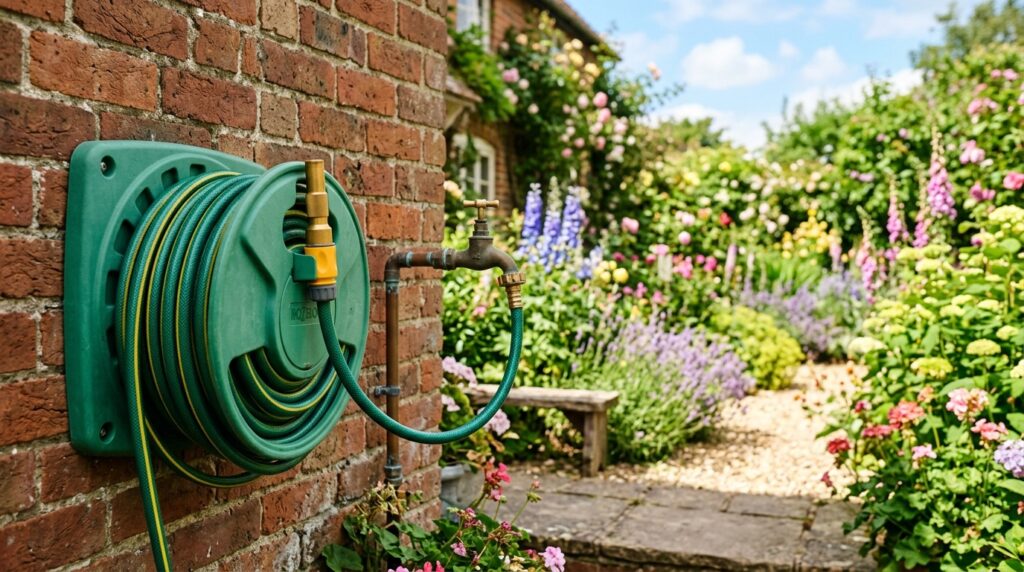
A hose reel — whether freestanding, wall-mounted or cart-based — is one of the best accessories you can buy alongside a new hose. It dramatically extends the life of the hose by preventing sharp bends and tangles, and makes storage and deployment much faster.
Key Features Worth Looking For
- UV resistance — important if the hose will be left outdoors regularly
- Drinking water safe — relevant if you plan to use the hose near edible plants or to fill a water butt used for vegetables
- Burst pressure rating — the higher this figure, the better the hose will cope with mains pressure without swelling or splitting
- Warranty — a manufacturer willing to back their hose with a multi-year warranty is a good sign of quality
Common Buying Mistakes to Avoid
Many gardeners end up disappointed with their hose because of a handful of avoidable errors. The most frequent include buying purely on price, choosing an unnecessarily long hose, overlooking fitting quality and ignoring storage entirely. A mid-range hose stored on a decent reel will outlast a budget hose left in a heap at the side of the shed.
It is also worth thinking about the nozzle or spray gun you will use. Many hoses are sold without one, or with a very basic attachment. A good adjustable spray gun with multiple patterns — jet, mist, shower and so on — makes watering far more versatile and enjoyable.
Making Your Final Decision
Before you commit to a purchase, run through these practical questions:
- How far is the tap from the furthest watering point?
- Do you need to carry the hose between different parts of the garden?
- How much storage space do you have?
- Will the hose be left outside year-round or stored away in winter?
- Do you need accessories such as a reel, connectors or spray gun?
For most UK home gardeners, a 20–25 metre, 12–15 mm reinforced multi-layer hose with quality metal fittings and a wall-mounted reel represents excellent value and reliable everyday performance. If you are still weighing up your options, explore our consumer guides for straightforward, no-nonsense advice on a wide range of garden and outdoor products.
With the right hose in hand, watering your garden becomes less of a chore and a little more of a pleasure — which is exactly as it should be.