
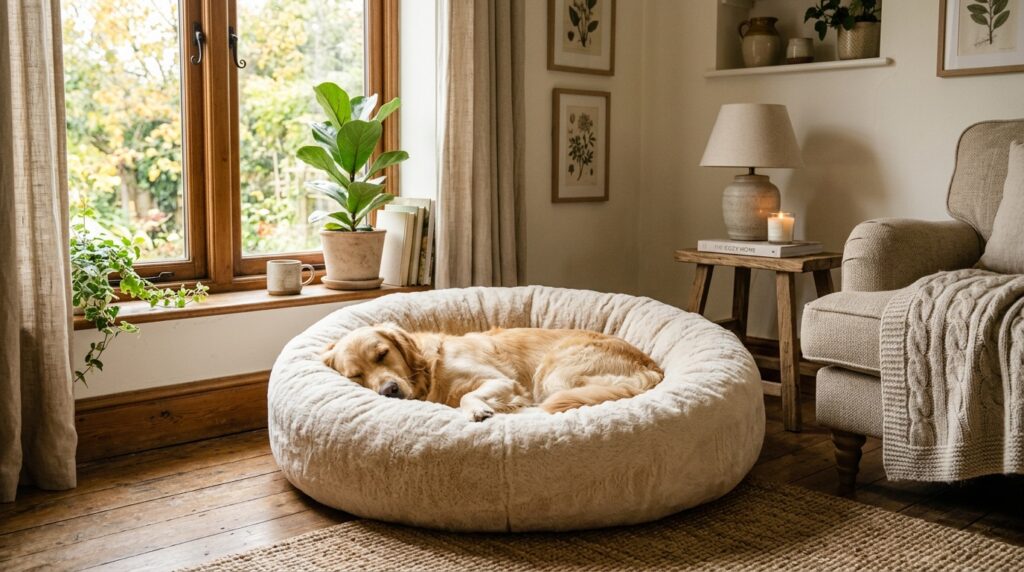
Why Your Pet’s Bed Matters More Than You Might Think
It’s easy to assume that any soft surface will do for a sleeping pet, but the right bed genuinely makes a difference to your animal’s health, warmth and overall wellbeing. Dogs and cats spend a significant portion of their lives resting — often 12 to 16 hours a day depending on age and breed — so where and how they sleep deserves proper thought. A well-chosen bed can support ageing joints, reduce anxiety, keep fur contained and protect your furniture from becoming a permanent napping spot.
Whether you’re bringing home a new puppy, settling in a rescue cat or simply replacing a worn-out old bed, this guide will walk you through the key decisions so you can shop with confidence.
Types of Pet Bed: Which Style Suits Your Animal?
The market offers a wide variety of styles, and the best choice depends on your pet’s sleeping habits, size and temperament.
Donut or Bolster Beds
These round or oval beds feature raised edges all the way around, giving your pet something to rest their head against and a sense of being enclosed. They’re particularly popular with cats and smaller dogs who like to curl up tight. The walls also offer a degree of draught protection, which is welcome in older or less-insulated homes during winter.
Flat Mattress or Cushion Beds
A simple rectangular or oval cushion is often the go-to for larger dogs who like to stretch out fully. These are generally easier to wash and simple to position in a crate or under a desk. Look for a base with a non-slip underside, especially on hard flooring.
Cave or Hooded Beds
Cats in particular often feel more secure when they can hide away. Cave-style beds with a partial or full hood satisfy this instinct beautifully. Anxious dogs can also benefit enormously from the enclosed feeling a hooded bed provides.
Orthopaedic Beds
If your pet is older, has joint problems or is recovering from surgery, an orthopaedic bed with a memory foam or high-density foam base can ease pressure on hips, elbows and spine. These tend to be flat mattress designs and are often recommended by vets for breeds prone to arthritis such as Labradors, German Shepherds and larger mixed breeds.
Raised or Elevated Beds
Raised cot-style beds lift your pet off cold or damp floors, which can be especially useful in utility rooms, garages or outdoor sheltered areas. They promote airflow in summer and are easy to clean. They’re generally better suited to dogs than cats.
Choosing the Right Size
Sizing is one of the most common mistakes people make when buying a pet bed. A bed that’s too small will be ignored; one that’s far too large may not give your pet the snug feeling they prefer.
For dogs, measure your pet from nose to the base of the tail whilst they’re lying down, then add roughly 20 to 30 centimetres. This gives enough room to stretch without the bed feeling like a vast open space. For cats, most standard beds sized around 50–60 cm across will suit the majority of domestic breeds, though larger breeds such as Maine Coons will need more space.
If you’re buying for a puppy, resist the urge to buy enormous beds in anticipation of adult size — puppies often feel more secure in something cosy and appropriately scaled. You can always upgrade as they grow.
Materials and Filling: What to Look For
The outer fabric and inner filling both play a role in comfort, durability and how easy the bed is to keep clean.
- Fleece and microfibre: Soft, warm and popular for most indoor pets. These fabrics tend to be gentle on sensitive skin but can pill over time with repeated washing.
- Cotton or linen blends: More breathable than fleece, which suits pets that run warm or live in well-heated homes.
- Water-resistant or wipe-clean covers: Essential for puppies still being house-trained, elderly pets with incontinence issues or any animal that regularly comes in muddy from the garden.
- Memory foam: Ideal for orthopaedic use. Moulds to your pet’s shape and relieves pressure points effectively.
- Hollow fibre filling: Lightweight, machine washable and widely used in standard cushion and donut beds. It compresses over time, so check whether the bed can be topped up.
Washability: A Practical Must
Any responsible pet owner knows that beds need to be washed regularly to control odour, remove allergens and manage the inevitable accumulation of pet hair. Before you buy, check whether the cover is removable and machine washable. Ideally, look for beds that are washable at 40°C or higher, as this temperature is more effective at killing bacteria and dust mites.
At our product advice hub, we always recommend prioritising practicality alongside comfort — a bed that’s a nightmare to clean will quickly become a source of frustration regardless of how appealing it looks in the shop.
Placement: Where Should the Bed Go?
Where you position your pet’s bed is almost as important as the bed itself. Most dogs appreciate being in a social area of the home — near the living room or kitchen — where they can rest but still feel part of family activity. Cats tend to prefer elevated spots or quiet corners with a good line of sight to the room.
Avoid placing beds directly in draughts, next to radiators that may overheat your pet or in high-traffic corridors where the animal will be disturbed regularly. Consistency also helps — keeping the bed in the same location gives your pet a reliable, reassuring space of their own.
Common Buying Mistakes to Avoid
- Buying purely on looks rather than your pet’s actual sleeping style
- Choosing a non-washable bed or one with covers that don’t zip off easily
- Ignoring your pet’s preference — some animals genuinely dislike certain textures or enclosed spaces
- Forgetting to account for how much your pet sheds when choosing fabric colour or texture
- Assuming one bed is enough — many owners find a second bed in a quieter room is appreciated
Budget: What Should You Expect to Spend?
Pet beds range from under £10 for a basic cushion to well over £100 for a large orthopaedic model with a washable cover. For most households, a mid-range bed costing £25 to £60 will offer a solid balance of comfort, durability and ease of cleaning. Orthopaedic beds for larger or elderly dogs represent a more significant investment, but one that can genuinely improve quality of life and reduce vet visits related to joint discomfort.
If you’re weighing up options across different product types and price points, the kind of practical, side-by-side guidance available through trusted buying advice resources can help you narrow things down before you commit.
Final Thoughts
Buying the right pet bed comes down to knowing your animal — their size, sleeping style, health needs and personality. A well-chosen bed isn’t just a luxury; it’s an investment in your pet’s comfort and your own peace of mind. Take your time, measure carefully, check the washing instructions and don’t be afraid to try a couple of options until you find what your dog or cat genuinely settles into happily.