
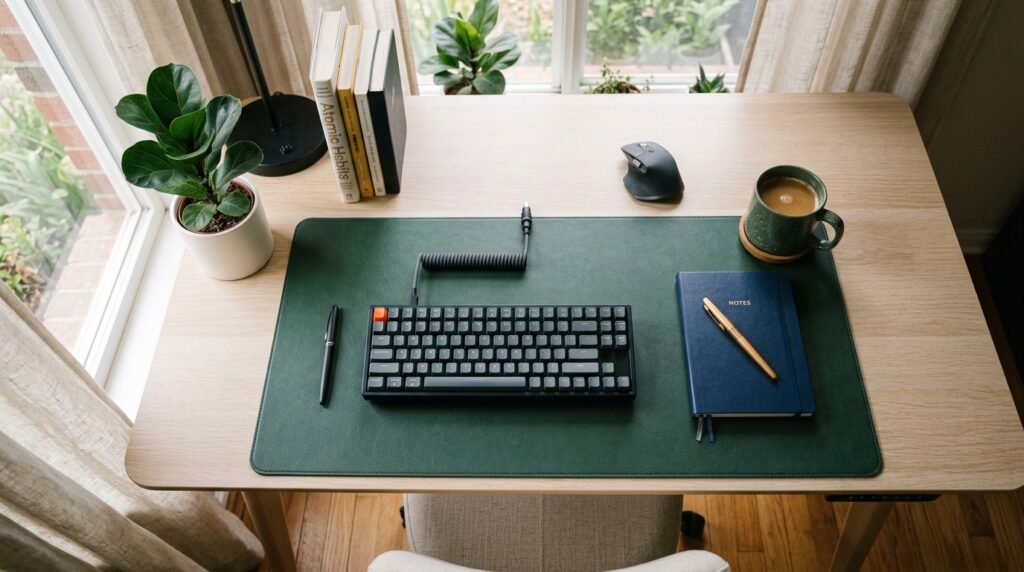
Why a Desk Pad Is Worth Considering
A desk pad might seem like a small addition to your workspace, but it can make a genuine difference to how comfortable and organised your desk feels day to day. Whether you are working from home, studying at a school desk or managing a busy office environment, a quality desk pad protects your surface from scratches, spills and general wear, while also giving you a smoother, more comfortable area to write, type and rest your wrists.
Beyond practicality, a well-chosen desk pad can also tidy up the look of your workspace considerably. A cluttered desk with a scuffed surface can feel uninspiring; a clean, unified desk pad underneath your monitor, keyboard and notepad can give the whole area a much more polished, intentional feel.
If you are exploring ways to improve your everyday workspace, our practical buying guides cover a wide range of office and home essentials that can help.
Types of Desk Pad to Know About
Desk pads come in several different styles, each suited to different needs and preferences. Understanding the main types before you buy will help you avoid a purchase you later regret.
Leather and Faux Leather Desk Pads
These are among the most popular styles for home offices and professional desks. Genuine leather desk pads are durable, develop a pleasing patina over time and look smart in both traditional and modern settings. Faux leather (PU leather) versions offer a similar appearance at a lower price point and are generally easier to wipe clean. Both types provide a smooth writing surface and hold up well under daily use.
Extended Mouse Pads and Gaming-Style Desk Mats
If you use a mouse regularly, an extended mat that covers most of your desk gives you plenty of room to move your mouse freely without it running off the edge. These mats are typically made from fabric with a rubberised non-slip base. They are particularly popular with people who do a lot of computer work and want a unified surface for both keyboard and mouse.
Cork and Natural Fibre Desk Pads
Cork desk pads are a good option if you prefer natural, sustainable materials. Cork provides a slightly textured, warm surface that is comfortable to rest your hands on and naturally resistant to minor spills. Natural fibre mats, such as felt, offer a similar aesthetic and work well in calmer, minimalist workspaces.
Clear Plastic and Glass Desk Mats
Transparent desk mats allow the surface of your desk to show through while still protecting it from scratches and marks. These work particularly well on desks with a wood grain or decorative finish that you want to keep visible. They tend to be easier to clean than fabric options and can double as a surface under which you might slip notes, a weekly planner or photos.
Key Features to Consider Before You Buy
Size and Coverage
One of the most common mistakes buyers make is choosing a desk pad that is too small. Think about what you actually place on your desk and how much of that area you want covered. A small writing pad might suit a compact student desk, while a full-size home office setup will benefit from a large mat that covers the entire central working area. Measure your desk before ordering, and check product dimensions carefully rather than relying on descriptions like “large” or “standard,” which can vary considerably between brands.
Surface Texture and Writing Feel
If you do a lot of handwriting, the texture of your desk pad matters more than you might expect. A surface that is too rough will make writing uncomfortable; one that is too smooth may cause paper to slide around. Leather and faux leather pads typically offer a firm, slightly smooth surface ideal for writing. Fabric pads are softer and better suited to those who prioritise mouse comfort over pen-and-paper tasks.
Non-Slip Backing
A desk pad that slides around as you work quickly becomes an irritation rather than a help. Look for a pad with a rubberised or textured underside that grips your desk surface without causing damage. This is particularly important if your desk has a polished or lacquered finish.
Ease of Cleaning
Consider how the pad will hold up to spills, crumbs and general use. Faux leather and clear plastic pads can usually be wiped clean in seconds. Fabric pads may require spot cleaning or occasional hand washing. If you eat at your desk or have young children who use the workspace, a wipe-clean surface is likely the more practical choice.
Aesthetic and Style
Your desk pad will be one of the most visible items on your workspace, so it is worth choosing something that complements your existing setup. Neutral colours such as black, grey, dark green and tan suit most environments. Bolder colours or patterned mats can add personality to a home office or children’s study area without overwhelming the space.
Who Benefits Most from a Desk Pad?
Desk pads are genuinely useful for a wide range of people. Students benefit from having a clean, defined area for writing and studying. Remote workers find that a quality mat elevates the feel of a home office and makes long working days more comfortable. Anyone with a wooden desk will appreciate the protection against scratches from keyboards, cups and everyday items. Office managers outfitting shared workstations may also find that standardising desk pads gives the space a more consistent, professional appearance.
For more advice on setting up a productive and comfortable workspace, browse our range of practical product guides covering everything from desk organisation to lighting and storage solutions.
Common Buying Mistakes to Avoid
- Buying without measuring: Always check the dimensions against your actual desk space before purchasing.
- Choosing style over function: A beautiful leather pad is of little use if it slides off the desk every time you lean on it.
- Ignoring the underside: The quality of the non-slip base is just as important as the top surface.
- Overlooking thickness: Very thin pads offer minimal cushioning and can crease or curl at the edges over time. Look for something with a little body to it.
- Forgetting about edge finishing: Stitched or bound edges last considerably longer than unfinished fabric edges, which can fray with regular use.
Final Thoughts
A desk pad is a modest investment that pays off quickly in terms of comfort, desk protection and the overall feel of your workspace. Take time to consider the size you need, the material that suits your daily tasks and a style that you will be happy to look at every day. Get those three things right and a quality desk pad will serve you well for years to come.