
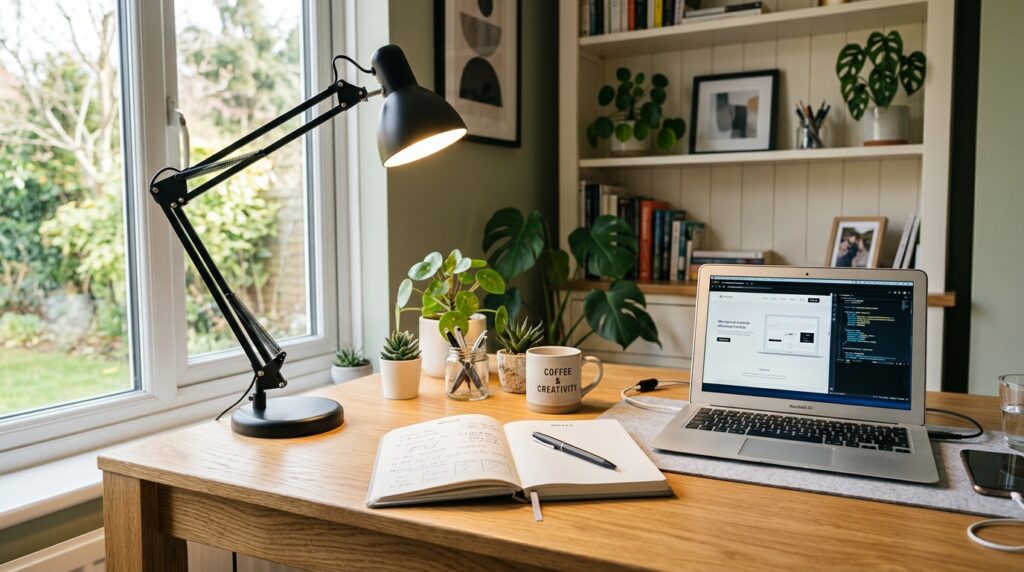
Why the Right Desk Lamp Makes a Bigger Difference Than You Might Think
A desk lamp might seem like a straightforward purchase, but choosing the wrong one can lead to eye strain, headaches, poor concentration and even disrupted sleep. Whether you are setting up a home office, equipping a child’s study space or simply trying to make a dark corner of your living room more functional, the right lamp can transform how comfortably and effectively you work.
At our practical buying guide hub, we aim to take the guesswork out of everyday purchases — and desk lamps are a perfect example of a product where a little knowledge goes a long way. This guide walks you through the key features to consider before you buy.
Understanding Brightness and Lumens
Brightness is measured in lumens, not watts. Watts measure energy consumption, not light output — a common source of confusion when people are used to traditional bulbs. For a desk lamp, you generally want something in the range of 450 to 800 lumens for focused task lighting. Higher lumens are helpful for detailed work such as drawing, crafting or reading small print, while lower output may suit ambient or mood lighting better.
Many modern desk lamps include dimmer controls, which allow you to adjust brightness depending on the time of day, the task at hand and how much natural light is coming into the room. This flexibility is well worth paying a little extra for.
Colour Temperature: Getting the Tone Right
Colour temperature is measured in Kelvin (K) and has a significant effect on how comfortable and alert you feel whilst working. Here is a simple breakdown:
- Warm white (2700K–3000K): Creates a soft, cosy atmosphere. Better suited to relaxed reading or evening use when you do not want to disrupt your natural winding-down process.
- Neutral white (3500K–4500K): A balanced, natural-feeling light that works well for general desk tasks, studying and home office work throughout the day.
- Cool white or daylight (5000K–6500K): Crisp and energising, ideal for detailed or technical work. However, using this in the evening can interfere with sleep by suppressing melatonin.
The best desk lamps for study or office use often allow you to switch between colour temperatures, giving you control over the mood and function of your light source at different times of day.
Eye Care Features Worth Looking For
If you spend long hours at a desk, eye care features are not a luxury — they are genuinely worth prioritising. Look out for:
- Flicker-free technology: Cheap lamps can produce an imperceptible flicker that causes eye fatigue over time. Quality LED lamps are designed to eliminate this.
- Anti-glare diffusers: A lamp with a diffused or frosted shade distributes light more evenly and reduces harsh reflections on screens or paper.
- Wide illumination area: A lamp that lights a broader area of your desk reduces the contrast between the bright working zone and the darker surroundings, which is easier on the eyes.
LED Versus Other Bulb Types
For most buyers today, LED is the clear winner. LED desk lamps are energy-efficient, long-lasting (often rated for 30,000 hours or more), produce minimal heat and are available across a wide price range. Halogen lamps were once popular for their warm, natural light quality, but they run hot and consume considerably more energy. Fluorescent options offer reasonable efficiency but are bulkier and less flexible in terms of design.
Unless you have a very specific reason to choose otherwise, an LED desk lamp is almost always the most practical and cost-effective choice for everyday use.
Adjustability and Arm Design
A lamp that cannot be positioned correctly for your workspace is a frustrating purchase. Look for models with:
- A fully adjustable arm that can extend, retract and rotate to direct light exactly where you need it.
- A swivelling or tilting lamp head so you can angle the light without repositioning the whole lamp.
- A stable weighted base or a robust clamp fitting if you prefer to fix the lamp to the desk edge, which frees up valuable surface space.
Architect-style lamps with multi-jointed arms give the most flexibility and are a popular choice for those who use their desk for a variety of tasks throughout the day.
USB Charging Ports and Extra Features
Many contemporary desk lamps come with built-in USB charging ports or wireless charging pads at the base — a genuinely useful bonus if your desk tends to become cluttered with cables. Some models include a built-in clock, a phone holder or even a small storage tray. These extras can be handy, but do consider whether they suit your actual workflow rather than being drawn in by features you will rarely use.
Touch-sensitive controls and memory settings (which remember your preferred brightness and colour temperature) are worth looking out for if you value convenience.
Choosing a Lamp for Children and Young Students
Children’s study lamps deserve particular attention. A lamp used for homework and reading should be bright enough to avoid squinting but gentle enough to avoid glare. Look for flicker-free LED models with a broad, even spread of light and a stable base that will not topple easily. Avoid lamps with exposed bulbs or parts that heat up significantly. Many parents also find that a lamp with a warm-to-neutral colour range is better suited to evening study sessions, helping children wind down naturally afterwards.
For more practical advice on setting up a productive and comfortable study space, browse through the guides and recommendations on our site covering everything from desk essentials to organisational tools for students of all ages.
Common Buying Mistakes to Avoid
- Choosing on style alone without checking lumens or colour temperature options.
- Buying a lamp that is too small for the desk surface, leaving large areas in shadow.
- Ignoring the quality of materials — a wobbly arm or a base that slides is immediately annoying in daily use.
- Overlooking the cable length, particularly if your nearest socket is not conveniently positioned.
- Assuming all LED lamps are equal — cheaper models may still flicker or produce uneven light.
What to Spend and Where to Start
A reliable desk lamp does not need to break the bank. Decent quality LED lamps with adjustable brightness and colour temperature are widely available from around £20 to £50. Premium models with full articulating arms, wireless charging and advanced eye-care certification tend to fall in the £60 to £120 range. It is generally worth spending a little more if the lamp will be used for several hours each day — the comfort and energy savings over time make the investment worthwhile.
Take stock of your actual working habits, the size of your desk surface, the amount of natural light in the room and whether you need a lamp that does double duty in the evenings before settling on a choice. A thoughtful decision made upfront will serve you far better than a hasty purchase you end up replacing within a year.