
Why a Garden Kneeler Is Worth Having
If you spend any meaningful time in the garden, your knees will eventually let you know about it. Kneeling on hard or uneven ground — even for short spells of weeding, planting or edging — puts real pressure on your joints and can leave you stiff and sore well into the evening. A good garden kneeler takes the strain away, letting you focus on the job rather than the discomfort.
Garden kneelers come in a surprising range of styles, materials and price points. From a simple foam pad that slips into your trug to a freestanding bench-style kneeler with handles and built-in pouches, there is something to suit every gardener, every budget and every level of mobility. Knowing what to look for before you buy can make all the difference between a product that earns its place in the shed and one that gathers dust in the corner.
The Main Types of Garden Kneeler
Foam Kneeling Pads
The simplest and most affordable option, foam kneeling pads are lightweight rectangles or circles of dense foam that you place directly on the ground. They are easy to carry, simple to rinse clean and perfectly adequate for quick garden tasks. Look for thick, closed-cell foam rather than thin open-cell varieties — closed-cell foam is firmer, more water-resistant and holds its shape over time. A minimum thickness of around 5 cm gives proper cushioning on gravel or compacted soil.
The downside is that foam pads offer no support when getting up or down, which can be a real drawback for anyone with knee, hip or back problems. They also tend to move around underfoot if you shift position.
Bench Kneelers with Handles
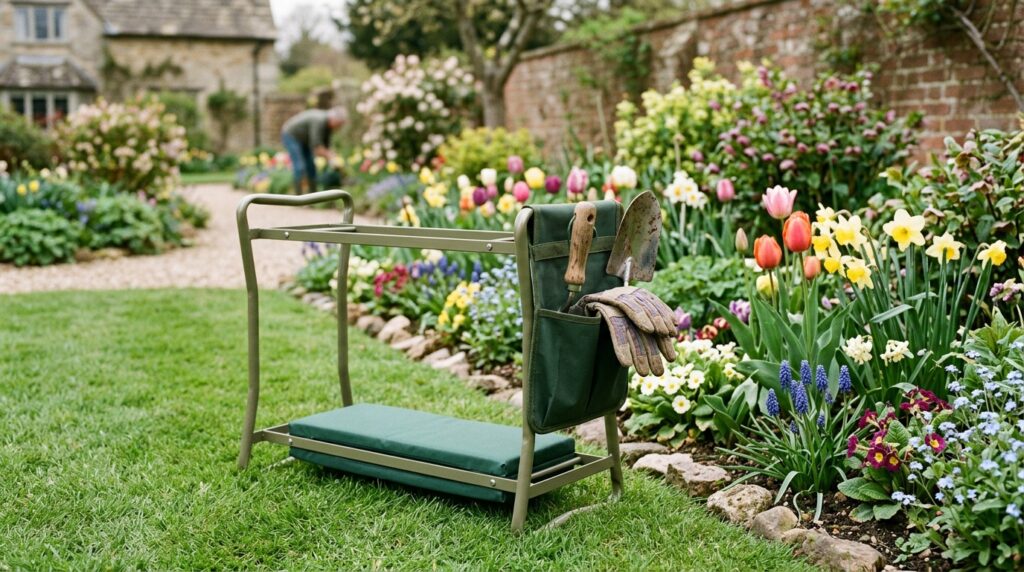
This is the most popular all-round style, and for good reason. A bench kneeler is a folding steel or aluminium frame with a padded kneeling surface on one side. When you flip it over and sit on it, it becomes a low garden stool. The sturdy side handles make it much easier to lower yourself to the ground and push yourself back up — a genuine benefit for older gardeners or anyone managing joint pain.
Many bench kneelers also include side pockets or pouches for small tools, seed packets and gloves, keeping essentials close at hand. When choosing one, check the weight limit (most handle between 120 kg and 150 kg), the quality of the frame joints and whether the padding is thick enough to actually provide cushioning rather than just decoration.
Kneeling Stools and Garden Seats
Some gardeners prefer a low kneeling stool — essentially a small seat that keeps them close to the ground without kneeling at all. These are useful for potting work, border maintenance or tasks where you need to shift along a row slowly. Look for a wide, stable base and non-slip feet, particularly if you are working on paving or decking.
Knee Pads
If you prefer to move freely rather than carry a separate pad, strap-on knee pads are worth considering. These are especially popular with gardeners who spend long sessions on all fours — working on vegetable beds, for instance. Good garden knee pads should have a hard outer shell to protect against stones and sharp debris, a thick inner foam layer for comfort, and adjustable, non-slip straps that hold them securely without cutting off circulation.
What to Look For When Buying
Padding Thickness and Material
This is the single most important factor for comfort. Thin or poorly made padding compresses quickly under bodyweight and offers little real protection. Look for at least 4–5 cm of dense foam, ideally with a wipe-clean or waterproof cover. Memory foam options are available and feel wonderfully comfortable, though they tend to be pricier.
Frame Strength and Stability
For bench-style kneelers, a wobbly frame is a safety hazard as much as a nuisance. Check that the frame is made from powder-coated steel or sturdy aluminium, that the folding joints are secure and that the feet have rubber or non-slip tips. Give it a gentle shake in the shop or check reviews carefully if buying online.
Weight and Portability
If you garden across a large plot or move between a vegetable patch, flower borders and greenhouse, a lightweight kneeler is much more practical. Aluminium-framed bench kneelers tend to be lighter than steel equivalents without sacrificing too much strength. Simple foam pads are obviously the lightest of all, but they lack the structural support many gardeners need.
Height and Size
Bench kneelers vary in height, and this matters more than it might seem. A seat that is too low can be just as awkward to get up from as kneeling itself. If you are tall or have limited flexibility, look for models with a slightly higher seat — some adjustable options exist, though they are less common. The kneeling pad itself should also be long and wide enough to accommodate your body comfortably.
Storage Features
Side bags and tool pouches might seem like a minor bonus, but they genuinely improve the gardening experience. Having your trowel, secateurs and a pair of gloves right next to you saves constant trips back to the shed and keeps your workflow smooth. Check that the pouches are made from robust fabric and that they sit securely without flapping about.
Who Should Consider a Kneeler?
Honestly, most regular gardeners benefit from some form of kneeler — not just those with existing joint pain. Prevention is always better than cure, and developing good kneeling habits early protects your joints over the long term. That said, if you find it difficult to get up and down from the floor, a bench kneeler with handles is arguably an essential piece of kit rather than a luxury.
Older gardeners, those recovering from knee or hip surgery, and anyone who spends extended periods doing close ground work will notice the difference immediately. Even younger, fit gardeners doing heavy seasonal work — planting a whole border, laying bulbs across a large lawn — find a proper kneeler reduces fatigue significantly. For a broad range of practical buying advice on products like this, it is always worth checking a trusted consumer buying guide before making your purchase.
Common Buying Mistakes to Avoid
- Choosing the cheapest foam pad available — very thin pads offer almost no real cushioning on hard ground and deteriorate quickly.
- Ignoring the weight limit — always check the stated capacity on bench kneelers, particularly if you plan to use the seat position regularly.
- Overlooking waterproofing — a kneeler that soaks through after five minutes on wet grass is far less useful than one with a wipe-clean or waterproof cover.
- Buying purely on looks — a stylish design counts for nothing if the frame wobbles or the padding is paper-thin.
- Forgetting to consider storage — if you have limited shed space, a kneeler that folds flat is far more practical than a bulky moulded design.
Caring for Your Garden Kneeler
Most kneelers require very little maintenance, but a few simple habits will extend their life considerably. Rinse foam pads and padded covers with clean water after muddy sessions and allow them to dry fully before storing — damp foam deteriorates faster and can develop mildew. For bench-style kneelers, wipe the frame down occasionally and apply a little light oil to the folding joints if they begin to stiffen. Store your kneeler in a dry place over winter rather than leaving it outside, especially if the frame is steel, which can rust at exposed joints over time.
A good kneeler is one of those deceptively simple purchases that makes a real difference to how much you enjoy gardening. If you are looking for straightforward, practical product advice across a wide range of everyday categories, the team at Brymore School’s consumer guides covers everything from garden essentials to home organisation in one easy-to-navigate resource.
Final Thoughts
A garden kneeler does not need to be expensive to be effective, but it does need to be well-made, appropriately padded and suited to the way you actually garden. Think about how long you typically spend kneeling, whether you need the added support of handles, and how much space you have to store it. Get those fundamentals right and you will wonder how you ever managed without one.